
-1.svg)
What is a product configurator? Why should I even care? Do I really need one? You're not alone. These are the same questions many retailers are grappling with as they try to keep up with the ever-evolving digital shopping experience.
People want choices. They crave personalized experiences. And as an ecommerce business, that means showing your products in a way that gives them exactly what they want—even when they can't touch or see the items in person. That’s where the product configurator comes in.
What Is a Product Configurator?
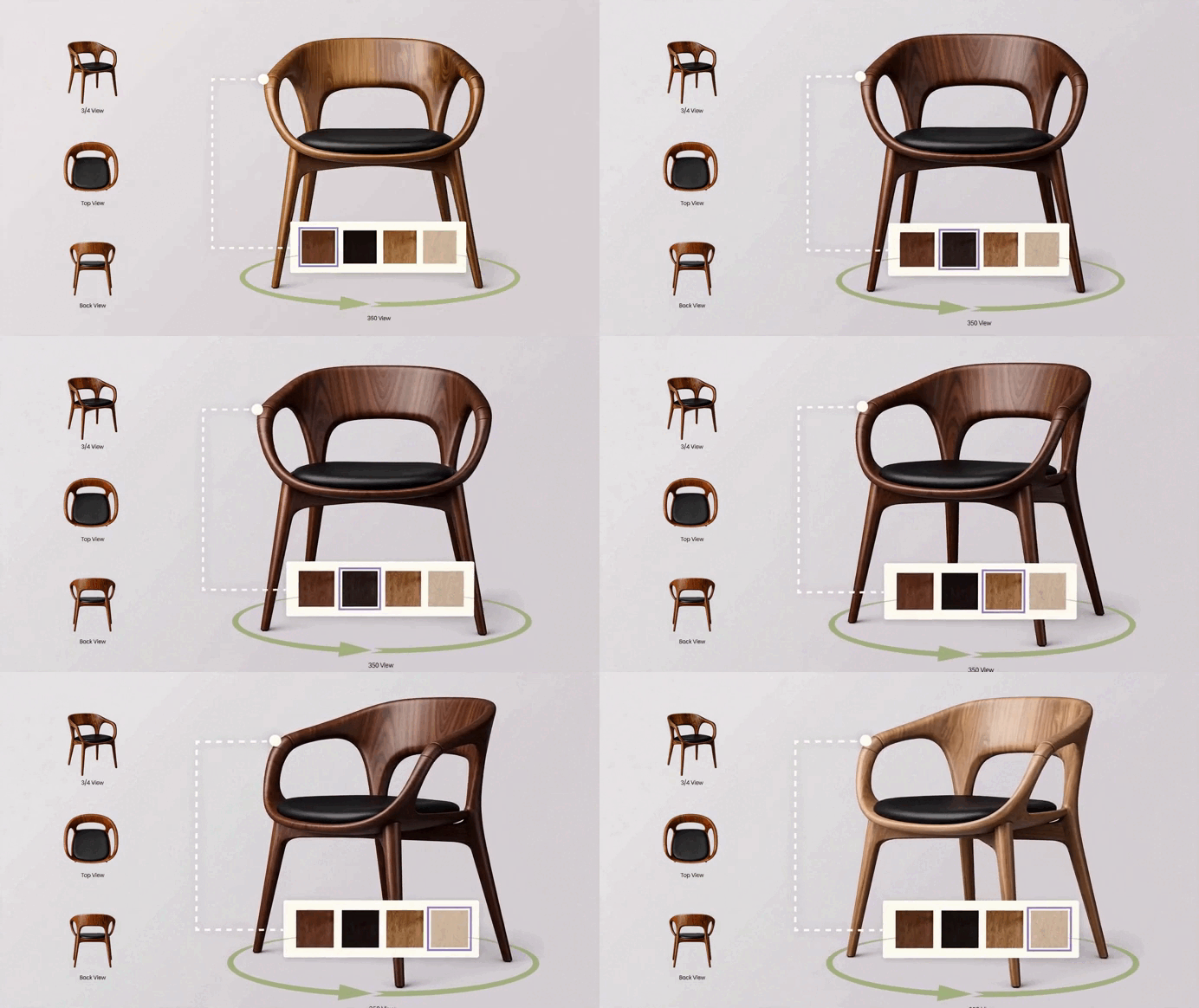
A product configurator is a digital tool embedded directly on a website that allows customers to customize a product in real-time.
Instead of guessing from static photos or scrolling through long dropdowns, customers can adjust colors, materials, sizes, features, and add‑ons and instantly see the product update on screen.
Product configurators turn shoppers into creators. They improve customer satisfaction, reduce returns, and make online shopping personal.
No matter the industry, product configurators are now a key tool for modern ecommerce.
The Evolution of Product Display: Static vs. 2D vs. 3D
Static Product Images
The traditional approach. You provide a few photos from different angles. It’s lightweight and easy to implement, but offers zero interactivity and leaves customers guessing what specific customizations might look like together.
2D Product Configurators
A step up. These allow users to change basic features (like swapping a red shirt for a blue one) through layered images. It’s functional for simple products but remains a flat, restrictive experience.
3D Product Configurators
This is where visual commerce comes alive. A 3D product configurator lets customers rotate, zoom, and customize a product in real-time right on your website. Often paired with Augmented Reality (AR) to allow buyers to virtually place a customized item into their real space. Advanced configurators support modular builds, letting users assemble complex products piece by piece.
How Does a Product Configurator Work?
The process is designed to be simple and intuitive for the customer. Here’s what typically happens:
- Selection: The customer starts by selecting the base item they want to customize.
- Customization: The product configurator presents a range of customizable options, such as color, material, and additional features. The user can select these options according to their preferences, all while seeing real-time updates on how these choices affect the final product.
- Validation: As the customer makes their selections, the product configurator’s built-in rule engine works behind the scenes to ensure that all chosen combinations are compatible. This engine uses a set of predefined rules to validate the choices, ensuring that the product can be manufactured as configured.
- Price calculation: Once the customization is complete, the configurator automatically calculates the total cost based on the selected features. The shopper gets a clear, accurate quote before moving forward.
- Purchase: With the product fully customized and validated, the customer can confidently complete the purchase, knowing that the final product will match their exact specifications.
Types of Product Configurators
Product configurators vary based on product complexity and customization needs. Here’s a quick overview of the main types and how they enhance both user experience and sales.
1. PTO (Pick-to-Order): Configurators for Variants and Options
PTO configurators are the simplest and most common type used in ecommerce.
- Allow customers to choose from predefined options such as colors, materials, sizes, or finishes.
- May include optional add-ons or accessories to enhance the base product.
- Best suited for straightforward products with independent options.
2. ATO / CTO (Assemble-to-Order / Configure-to-Order): Configurators with Dependencies
ATO/CTO configurators are designed for more complex products with many interdependent options.
- Manage large sets of options and how they interact (e.g., fabric, cushions, finishes, layouts).
- Use built-in logic to validate selections and prevent incompatible combinations.
- Ensure every configuration is accurate, manufacturable, and production-ready.
3. MTO (Make-to-Order): Configurators for Customized Products
MTO configurators support products that are built to order based on customer specifications.
- Enable deep customization, including dimensions, materials, and design features.
- Provide detailed visualization and real-time pricing based on selections.
- Handle complex rules to ensure each custom product is feasible.
4. ETO (Engineer-to-Order): Configurators for New or Complex Products
ETO configurators are used for highly customized or newly designed products that require engineering input.
- Check technical feasibility and ensure all components fit together.
- Support cost estimation and may generate technical drawings or specifications.
- Apply detailed rules and constraints to meet all technical requirements.
Key Benefits of Product Configurators
1. Visual Confidence That Drives Conversions
When customers can interact with a product in 3D (rotating, zooming, and exploring every detail), uncertainty drops dramatically. This clarity builds trust, which directly boosts conversion rates and reduces returns. It also opens natural opportunities for upselling and cross-selling by suggesting relevant add-ons and complementary features during the configuration process.
2. Stronger Engagement Through Personalization
Modern shoppers expect personalized experiences, not static catalogs.
An interactive configurator turns browsing into a hands-on experience where customers actively design their product. This keeps users engaged longer and increases purchase intent.
According to McKinsey, 71% of consumers expect personalized experiences, while Deloitte reports 36% demand for custom products. Meeting these expectations leads to higher satisfaction and stronger buying decisions.
3. Faster Decisions With Instant Pricing
Instead of waiting for quotes or contacting sales, customers see pricing updates instantly as they customize their product. This transparency builds trust, removes friction, and helps to shorten the sales cycle.
4. Less Pressure on Sales Teams
For products with many variations, configurators eliminate repetitive questions about compatibility and options.
Built-in logic ensures only valid configurations are possible, reducing errors and support workload. This allows sales teams to focus on higher-value activities such as closing deals and supporting complex customer needs.
5. Smoother Operations Through System Integration
Advanced configurators connect with ERP, CRM, and inventory systems to ensure everything stays in sync. This means smooth order management, better data flow, and less manual work on your end.
 Ready to bring these benefits to your own store?
Industries Using Product Configurators
Furniture & Interior Design
Furniture is one of the most common use cases for product configurators. Customers want to design furniture that fits their space and style.
With 3D configurators for furniture, they can change colors, materials, finishes, and sizes. They can see how a sofa looks with different legs or how a table fits in their living room. This reduces returns because buyers know exactly what they are getting. Many online stores now offer AR visualization, so customers can place virtual furniture in their rooms before buying.
Manufacturing & Engineering
In manufacturing and engineering, product configurators help create complex products with many parts and options. Machines, tools, or industrial systems often need special configurations. A product configurator applies business rules to ensure all parts work together correctly. It saves time for both customers and sales teams. By connecting with ERP and production systems, configurators also speed up manufacturing and reduce costly errors.
Automotive & Vehicles
Car companies have used product configurators for years. Customers can build their own car by choosing colors, wheels, interiors, engines, and more. They see the final product as they make each choice. This creates a personal shopping experience and helps buyers feel confident in their decisions. Automotive product configurators also help dealers collect leads and shorten the sales process.
Apparel & Fashion
In fashion, customization is becoming more popular. Fashion product configurators allow customers to choose colors, fabrics, patterns, and sizes for clothing, shoes, or bags. This makes the shopping experience personal and fun. Shoppers feel more connected to the product when they design it themselves. Brands like Nike and Adidas use configurators to offer custom sneakers, which increase engagement and customer satisfaction.
Jewelry & Luxury Accessories
Jewelry product configurators give customers full control over the design of rings, bracelets, or watches. They can select metals, stones, settings, and engravings. 3D visualization shows exactly how the final piece will look. This helps avoid misunderstandings and ensures that the piece meets the buyer’s exact specifications. It also increases trust and reduces returns.
Industrial Equipment
Industrial equipment often has many complex options and features. Product configurators make it easier for businesses to order equipment that fits their specific needs. The configurator applies rules to prevent mistakes and ensures that each configuration is valid. It also integrates with production systems to streamline operations.
Real Examples of Product Configurators in Action
Nike: Shoe Configurator
Nike uses its “Nike By You” feature to let shoppers customize sneakers.
Key features:
-
Customize base design, laces, labels, outsoles, and more
-
Instant 3D preview reflecting every change
-
Seamless end-to-end ordering experience
Impact points:
-
High customer engagement through co-creation
-
Unique product personalization at scale
-
Supports both casual buyers and athletes
Herman Miller: Furniture Configurator
Herman Miller enables customers to design ergonomic furniture that fits both aesthetic preferences and spatial requirements.
Key features:
-
Customize materials, colors, and functional components
-
Real-time pricing updates during configuration
-
Accurate 3D + AR previews for in-room visualization
Impact points:
-
Improves spatial understanding before purchase
-
Reduces return rates from mismatched expectations
-
Supports spatial planning and budgeting

Cartier: Luxury Items Configurator
Cartier “Set For You” enables deep personalization of high-end jewelry and accessories with fine-detail control.
Key features:
-
Custom engagement rings (diamond selection, settings), watches (cases, materials, dials, straps), and eyewear with 800+ combinations
-
Real-time price updates
-
High‑end 3D visualization for luxury‑grade clarity
Impact points:
-
Delivers a premium, high-touch digital experience
-
Strengthens purchase confidence for high-value items
-
Reinforces Cartier’s luxury positioning and exclusivity
Louis Vuitton: High‑End Fashion Configurator
Louis Vuitton “Mon Monogram” and “My Heritage” services turn iconic products into fully personalized fashion statements.
Key features:
- Add initials, stripes, and stickers to bags and small leather goods
- Personalize jewelry, perfumes, and beauty cases with engraving
- Virtual try-on for cosmetics and selected accessories
Impact points:
- Higher time‑on‑site and stronger conversion
- Personalization elevates perceived value and supports premium pricing
- Virtual try‑on reduces returns and boosts purchase confidence

Porsche: Car Configurator
Porsche offers a deeply immersive configuration experience that lets buyers build their dream car down to the smallest detail.
Key components:
-
Full customization of interior and exterior
-
Real-time updates across colors, trims, materials, wheels, and tech options
-
360° visualization of the vehicle inside and out
Impact points:
-
Highly personalized, emotionally engaging shopping journey
-
Stronger connection before visiting a dealership
-
Reduces doubts and increases buyer commitment
Ray-Ban: Eyewear Configurator
Ray‑Ban’s configurator lets shoppers design eyewear that reflects their personal style, from frame shape to lens type.
Key features:
- Choose frame, lens, and add engraving
- Instant visual updates with every customization
- Full 3D view for accurate representation
Impact points:
-
Highly personalized shopping experience
-
Increased satisfaction with final product choice
-
Reduces post-purchase regret
 Want a Similar Experience for Your Store?
All the configurators used by these well-known brands are fully custom-built solutions.
If you’re considering creating your own one, our guide on how to build a 3D product configurator walks you through everything you need to know — from planning and scoping to development, launch, and long‑term maintenance.
By the end, you’ll have a clear picture of whether investing in a fully custom build makes sense for your business, or if a ready‑made SaaS platform or configuration engine will deliver faster results with lower risk.
Must-Have Features for a High-Converting Configurator
1. Photorealistic 3D Visualization
While 2D images are a start, modern shoppers expect total immersion. Your configurator should offer high-fidelity 3D rendering that allows users to rotate, zoom, and inspect textures from every angle. The goal: The digital twin should look so realistic that the customer feels they’ve already touched the product.
2. Real-Time CPQ (Configure, Price, Quote)
Pricing should update the moment a shopper changes an option. Real‑time CPQ removes surprises at checkout and gives sales teams instant, accurate quotes for B2B or custom orders.
3. Build-In AR
To complement your configurator’s 3D visuals, consider one that includes WebAR capabilities out-of-the-box. This try-before-you-buy experience is the ultimate tool for reducing returns. Try our AR Product Configurator.
4. Guided Selling & Logic Validation
If your product has technical rules, your configurator needs to enforce them. Guided selling prevents incompatible choices and keeps customers on a smooth, frustration‑free path — while ensuring every configuration is manufacturable.
5. Automatic Bill of Materials (BOM) Generation
A strong configurator connects directly to your operations. Automatic BOM creation ensures every order is production‑ready, eliminates manual data entry, and speeds up fulfillment.
6. Mobile-First, User-Friendly Interface
Even the smartest product configurator is useless if it’s hard to use. The software must load fast on any device, look clean, and be intuitive enough for a first-time user to navigate without a manual.
Choosing the Right Product Configurator Software
The best configurator for your business depends on your product complexity, how your team works, and what your customers expect. Focus on a few essentials:
-
Implementation Speed vs. Technical Expertise: Do you have a dedicated dev team to manage a complex build, or do you need a no-code/low-code solution that gets you to market in weeks rather than months?
-
Depth of customization: Are you offering simple variants or complex, multi‑step configurations?
-
Sales enablement needs: Do your sales reps need real-time pricing and instant quote generation, or is the tool purely for top-of-funnel engagement?
-
System integrations: Will the configurator need to connect with your ecommerce platform, ERP, CRM, or inventory systems?
Want to find the best SaaS configurator for your business?
We reviewed the top 12 product configuration platforms based on real user feedback, feature depth, market presence, and industry fit for 2026. This guide helps you quickly narrow your shortlist and skip weeks of demos and vendor calls.
Why Brands Choose Zolak?
Zolak was built to eliminate the compromise between power and simplicity.
If your goal is to increase conversions through better visuals and frictionless customization, Zolak delivers:
-
Photorealistic 3D rendering
-
Instant real‑time customization
-
Built‑in AR
-
Fast setup and predictable costs
-
Easy integration with Shopify, Magento, Salesforce, and more
It’s one of the most balanced solutions for ecommerce teams that want high visual quality without long, expensive projects.
Book a demo today to see how Zolak fits your product line!
Product Configurator FAQ
What is product configurator software?
Product configurator software is a digital tool that lets customers personalize a product before buying it.
Users can choose options like color, size, material, features, or accessories—and see those changes happen in real-time, usually with 2D, 3D, or AR visualization.
It’s used by ecommerce brands to offer personalized shopping experiences without needing a developer for every product variation.
What does a produt configurator software do?
A product configurator helps buyers:
-
Customize products based on their needs
-
Visualize changes instantly (rotate, zoom, switch colors, etc.)
-
Get real-time pricing as they make selections
-
Avoid mistakes, since the configurator checks compatibility rules
-
Place orders faster, with clear expectations
On the backend, it can generate SKUs, bills of materials, and order data to speed up production process.
What is the difference between configuration and configurator?
Configuration is the action — choosing options to build a product.
Configurator is the tool — the software that enables this process.
When a customer picks a sofa fabric, leg type, and size — that’s configuration.
The app that shows them the preview and updates the price is the configurator.
What is the difference between 2D and 3D product configurators?
2D configurators show flat images or illustrations of product changes.
3D configurators provide a rotatable, zoomable, real-time preview of the product from all angles.
What is an example of a configurable product?
Any product that can be customized before purchase is configurable.
Popular product configurator examples include:
-
A modular sofa with customizable layout, fabric, and legs
-
A t-shirt where you choose size, color, and upload your own design
-
A bike where you pick frame type, tires, gears, and accessories
-
A kitchen cabinet set built to fit the buyer’s layout and finish preferences
What is the purpose of a product configurator?
The purpose of a product configurator is to:
-
Make product customization easy for shoppers
-
Reduce confusion and returns by showing exactly what the final product will look like
-
Enable businesses to automate accurate pricing, order handling, and production.
-
Deliver a more interactive, engaging experience for online buyers
-
Enable on-demand manufacturing process, reducing waste and stock costs
-
Increase average order value (AOV) by encouraging upgrades and add-ons
Configurators help ecommerce brands scale personalization without manual effort.
Can I integrate a configurator with my ecommerce store?
Yes. Modern product configurators integrate with most platforms, including:
-
And more, plus custom-built stores