Skip to content

Production-Ready 3D Assets

 
Production-Ready 3D Models
Zolak creates accurate 3D product models with clean geometry, correct proportions, and the level of detail required for interactive use.
 
High-Fidelity PBR Materials
We create realistic PBR materials that capture surface colour, texture, reflectivity, and how each material reacts to light.
 
Optimised for Web Performance
Each model is optimised for fast loading, smooth interaction, and reliable performance across web-based 3D, AR, and rendering workflows.
 
Zolak Platform Integration
Every asset is created to work seamlessly with the Zolak CMS and visualisation engine, so it can be managed, reused, and delivered across Zolak-powered experiences.

What Is 3D Modeling for Ecommerce?

3D product modeling is the process of creating a three-dimensional digital representation of a physical product.

Unlike traditional product photography, 3D models allow shoppers to rotate products, zoom into details, explore materials, and view different configurations in real time.

A complete 3D asset includes:

  • 3D Geometry: The product's shape and structure.
  • PBR Materials & Textures: Realistic fabrics, wood, leather, metal, glass, and other surfaces.
  • Product Variations: Configurable colors, materials, finishes, and upholstery.
  • Optimization: Smooth performance across websites, mobile devices, and visualization tools.
65 (1)

Why Brands Invest in 3D Product Modeling

Group 3028 3
Maximize Product Pages
Turn static catalogs into interactive experiences where users can switch fabrics, colors, hardware, and configurations in real time.
Group 1544 (2)-1 1
Faster Content Production
Launch new products and variations digitally without waiting for physical samples or reshoots.
Group 3028 1
Scalable Product Catalogs
Easily manage and visualize thousands of SKUs and variations across ecommerce platforms and marketplaces.
Group 1544 (3)-1 1
Increase Customer Confidence
Photorealistic 3D models help customers clearly understand materials, proportions, and finishes before purchase.
Group 3029 1
Reduce Photoshoot Costs
Minimize or eliminate repeated studio photography, prototype shipping, and reshoot cycles when updating product lines.
Group 1544-1 1
Unlock Omnichannel Consistency
Use the same 3D assets across PDPs, AR, configurators, marketing campaigns, and B2B sales tools to maintain a unified visual identity across every channel.

Zolak for 3D Product Modeling

Zolak is a 3D visualization company built specifically for modern ecommerce.

We combine expert 3D production with a powerful visualization platform, helping brands build a scalable library of digital assets.

Unlike traditional 3D projects that end with a delivered model, every asset created by Zolak can be reused across 3D Viewers, Configurators, Showrooms, AR experiences, 3D Rendering, and future product launches.

01
Accurate digital twins built from precise geometry and photorealistic PBR materials
02
Industry-standard 3D assets optimized for ecommerce and interactive visualization
03
Centralized asset library managed through the Zolak CMS
04
Scalable production for large catalogs, configurable products, and multi-SKU collections

Our 3D Modeling Process


STEP 1

Reference Collection

We gather product dimensions, technical specifications, photography, material references, and configuration requirements to ensure every 3D model is built with accuracy.

STEP 2

3D Modeling

Our artists create the product geometry from scratch, accurately recreating its proportions, construction details, and key design features.

STEP 3

Material Creation

We develop photorealistic PBR materials that replicate the product's real-world appearance, including color, texture, roughness, reflectivity, and light interaction.

STEP 4

Configuration Setup

The finished assets are uploaded into the Zolak CMS, where products, materials, SKUs, and variations are configured for use across Zolak modules.

3D Model Complexity Levels

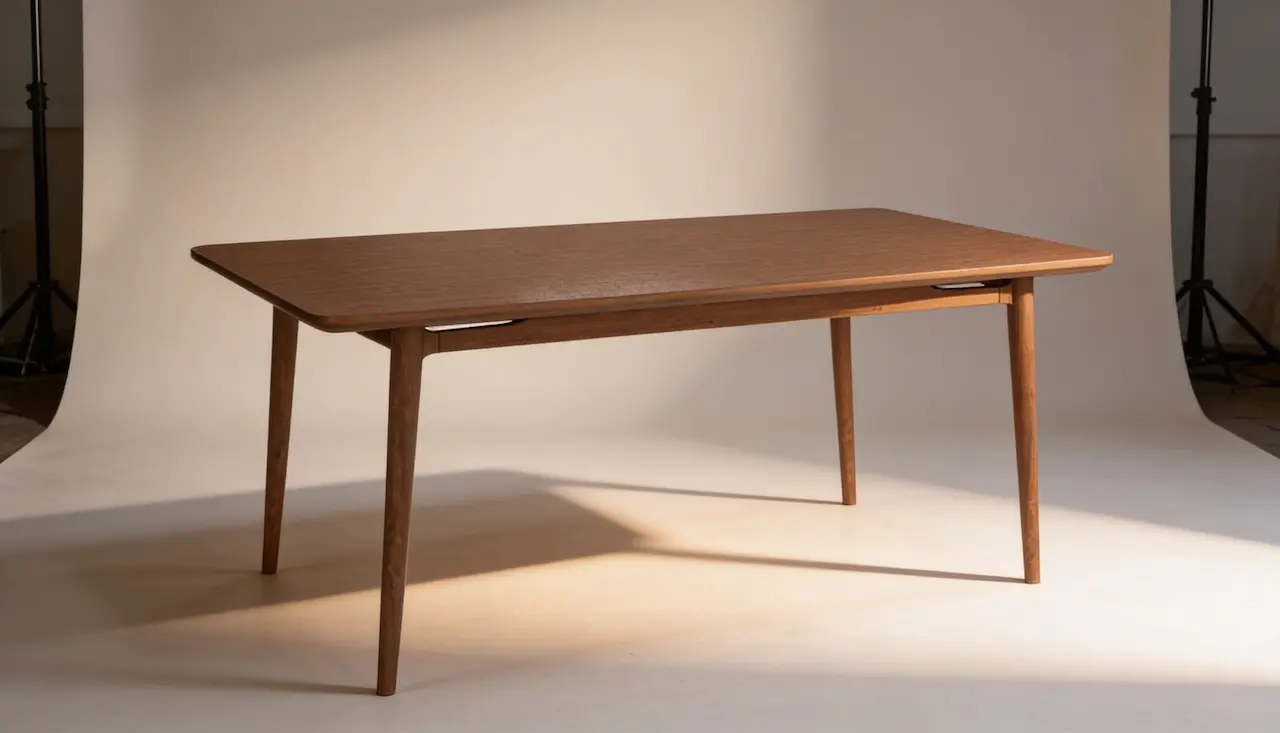
Simple 3D Models

Products with straightforward geometry and minimal components. Flat or gently curved surfaces with no stitching, piping, quilting, or decorative detailing.

Examples: Plain wooden or metal chairs, benches, credenzas, basic dining or coffee tables.

3d model simple

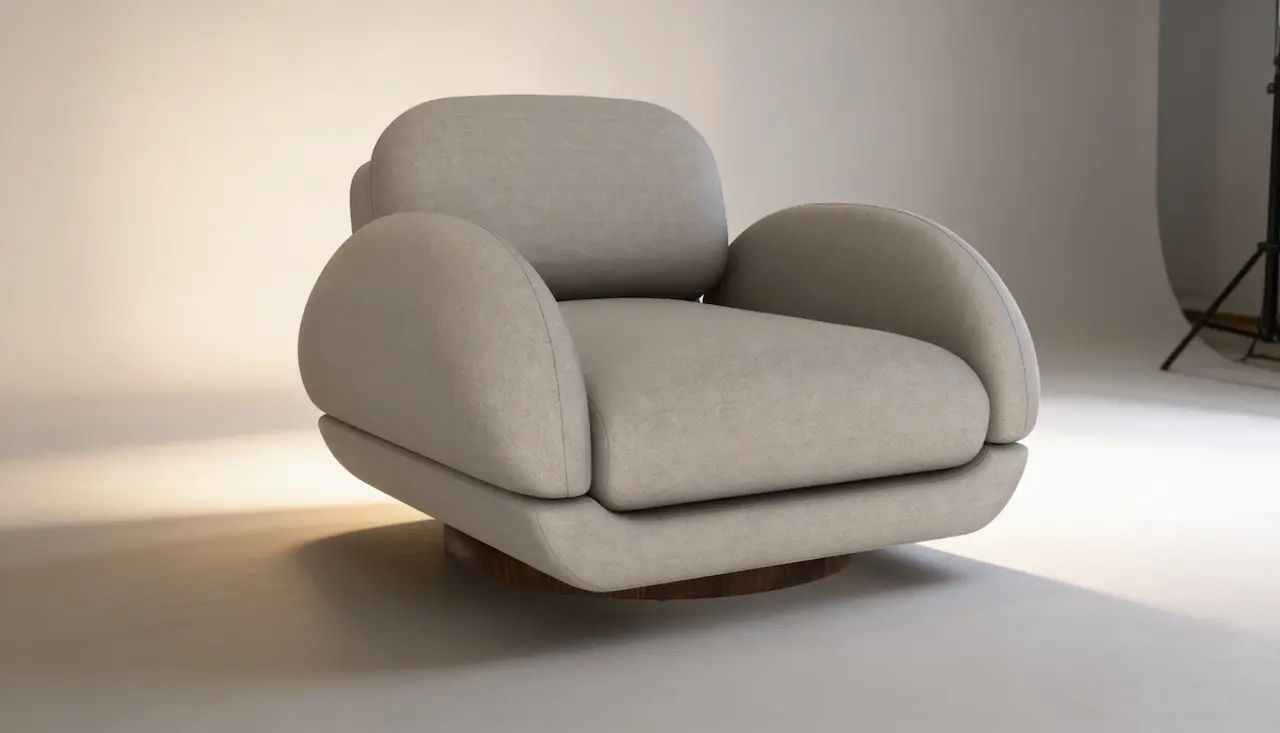
Medium 3D Models

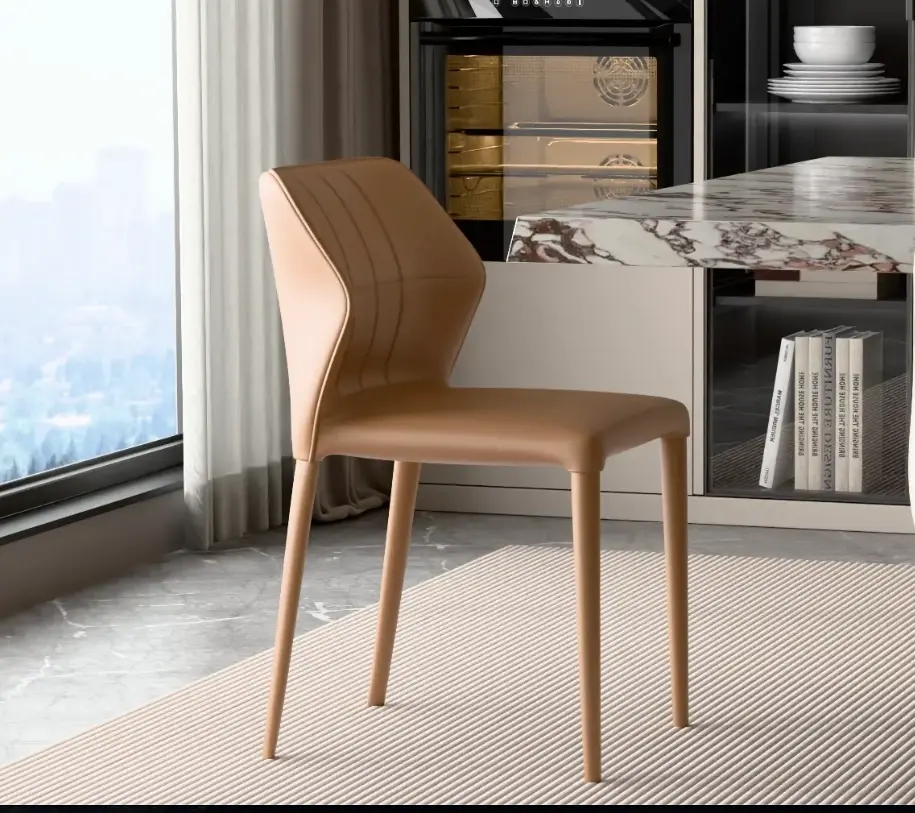
Products with moderate complexity or basic upholstered elements. May include curved backs or seats, simple seams or piping, and a limited number of decorative details.

Examples: Upholstered dining chairs, ottomans with simple seams, contemporary lounge chairs.

3d model medium

Try Zolak Showroom with Built-In Configurator Yourself

Equip your website with Zolak, letting customers arrange, remove, and interact with furniture in digital rooms or their own spaces.

Try Showroom Live overlay-pointer

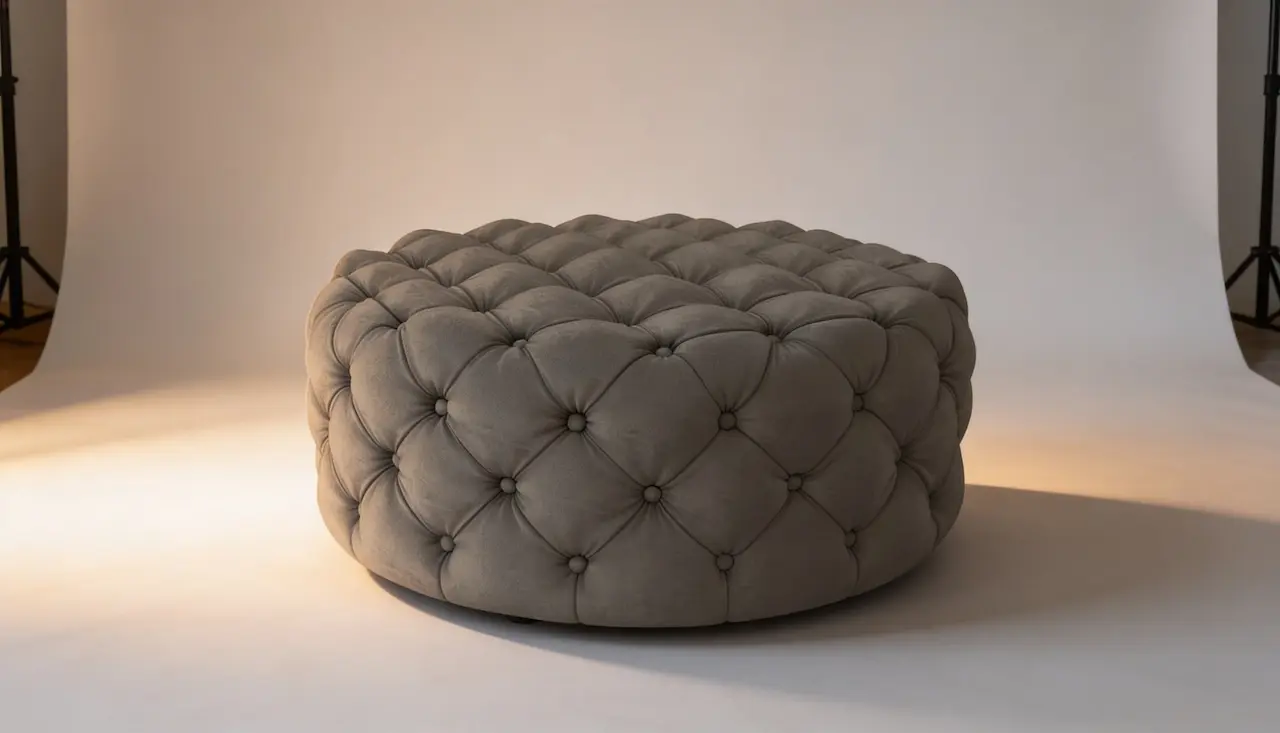
Complex 3D Models

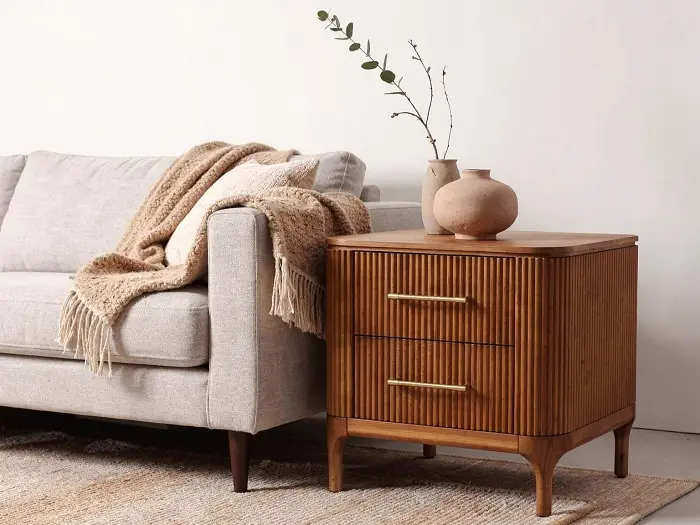
Products with intricate geometry and multiple detailed features. Includes deep tufting, quilting, extensive stitching or piping, woven/caned surfaces, carved wood, or forged metal components.

Examples: Wicker or rattan armchairs, cabinets with carved or ornate fronts.

3d model complex

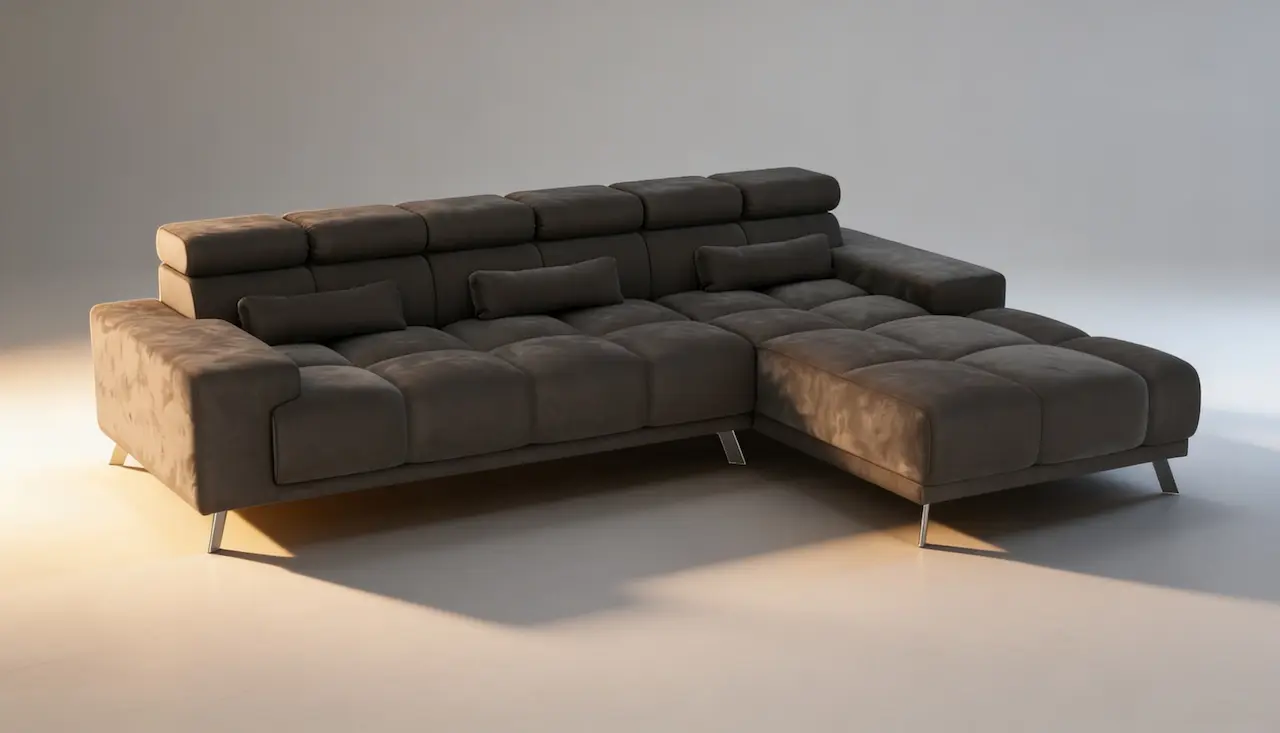
Ultra-Complex 3D Models

Highest-complexity products with intricate ornamentation or repetitive patterns, including hand-weaving, carving, lattice/perforated structures, and forged metalwork.

Examples: Fully woven lounge sets, classical carved furniture, decorative filigree or forged pieces.

3d model ultra complex

3D Material & Texturing

Photorealistic PBR Materials

Texturing is the process of creating realistic 3D materials that define how a product looks and responds to light. High-quality materials are essential for achieving photorealistic results and ensuring customers can accurately evaluate product finishes online.

All materials are created using industry-standard PBR workflows, stored within your dedicated Zolak material library and can be reused across future projects and product collections.

materials

Material Complexity Levels

  • Simple Materials: Uniform surfaces with minimal variation and straightforward visual properties.
  • Medium Materials:  Materials with visible grain, weave, texture, or natural variation that require more detailed recreation.
  • Complex Materials: Materials featuring intricate patterns, layered effects, relief, or significant surface variation that require advanced texturing techniques.
3d materials

What We Need to Create Your 3D Models

To create accurate, photorealistic 3D assets for your 3D Viewer, Configurator, or Showroom, we require a set of product references. The more complete the references, the faster and more accurately we can recreate your products in 3D.
01
Product Dimensions & Photography
Dimensions
Overall width, depth, and height
Measurements of cushions, armrests, backrests, legs, and other structural elements
CAD files or technical drawings (optional)

*CAD files are not required, but they can significantly accelerate production and improve dimensional accuracy.

Photography
Front, back, and side views
High-resolution images with even lighting
Close-up shots of stitching, seams, piping, joints, and construction details
02
Material & Texture References
Material Swatches
Flat material samples between 20 × 20 cm and 40 × 40 cm
Minimum resolution: 1024 × 1024 px (4096 × 4096 px recommended)
Evenly lit photography without shadows, reflections, folds, or distortions
Camera positioned parallel to the material surface

Texture References
Seamless or tileable material image (preferred)
Macro photos showing weave, grain, relief, and surface structure
Sharp, high-resolution images without compression artifacts

Material on Product
Product photos showing the material applied in real-world conditions
Close-up images showing texture scale, pattern direction, sheen, and surface details
References demonstrating how the material reacts to light
03
Product Configuration & CMS Data
To prepare assets for deployment inside the Zolak CMS, we require complete configuration and metadata.

SKU Structure
Product names and SKU IDs must match your ecommerce platform to ensure seamless integration

Configuration Logic
Clear definition of configurable options such as materials, finishes, and colors
Identification of fixed components and dependencies

Product Metadata
Pricing, variation descriptions, and any additional deployment data required for CMS setup and product configuration
Better References = Better 3D Models
The accuracy of a digital twin depends on the quality of the source materials. Clear dimensions, high-quality photos, material samples, and detailed product information help us create more realistic and accurate 3D assets.

To streamline the process, we provide step-by-step guidelines for product photography, material digitization, and asset preparation, ensuring you know exactly what is needed before production begins.

What Can 3D Product Models Be Used For?

  • 3D Product Configurators
    Customize materials, colors, fabrics, and details in real time with photorealistic 3D, and see the product in your space with AR.
  • 360 gif
    Give shoppers full spin‑and‑zoom control on PDPs for a deeper understanding of product details.
  • ar placement
    Place products in real space at true scale to improve confidence and reduce returns.
  • 26
    Generate photorealistic marketing images and contextual scenes without physical prototypes or studio shoots.
  • 2407122 (1)
    Virtual Showrooms & Digital Catalogs
    Present your full product line in an immersive, interactive digital environment for B2C or B2B buyers.
  • 9 example renders
    Omnichannel Marketing & Sales
    Use 3D assets across lookbooks, product launches, ads, social content, and interactive sales presentations.

Industries We Work With

  • furniture Furniture
  • Textiles & Fabrics (2) Textiles & Fabrics
  • Doors & Windows-1 Doors & Windows
  • Consumer Electronics Consumer Electronics & Gadgets
  • fashion Apparel, Footwear & Accessories
  • wall decor (1) Wall Decor
  • Lighting-2 Lighting
  • Jewelry Luxury Jewellery
  • sporting goods Sporting Goods & Equipment
  • eCommerce eCommerce

Trusted by Brands Hosting 100,000+ Products and Counting

valolma_logo_favicons-01-cropped 2

Emilia Peltola
Owner, Valolma

⭐⭐⭐⭐

"Zolak is not just a service provider — they are a trusted partner. Their ability to understand our needs, navigate evolving requirements, and provide flexible solutions made us feel confident throughout the project. We always felt like one unified team working toward a shared goal."


FAQ

What is included in your 3D product modeling service?
Our 3D product modeling services include 3D model creation, PBR material and texture development, product variation setup, quality assurance, and configuration within the Zolak CMS. The final assets are optimized for ecommerce, product configurators, virtual showrooms, and AR experiences.
How long does 3D modeling take?
Project timelines depend on product complexity, the number of materials and variations, and the quality of the reference materials provided. After reviewing your requirements, our team provides a clear estimated delivery timeline.

Typical production times:
  • Simple model: from 30 minutes
  • Medium complexity: from 1.5 hours
  • Complex: from 4 hours
  • Ultra-complex: from 6 hours
These are average production estimates and may vary depending on detail level and asset requirements.
How much does 3D product modeling cost?
The cost of 3D product modeling depends on the complexity of the product and the amount of detail required. Each model is individually assessed and assigned to one of four complexity levels:
  • Simple — from $30
  • Medium — from $60
  • Complex — from $150
  • Ultra-Complex — from $280
Factors that influence pricing include geometry complexity, upholstery details, decorative elements, product size, and the number of configurable components.
How much does 3D material creation cost?
3D material and texture creation is priced separately based on the complexity of the material being recreated:
  • Simple Materials — from $25
  • Medium Materials — from $40
  • Complex Materials — custom quote
Materials with intricate patterns, layered effects, unique textures, or advanced surface properties typically require additional work and are quoted on a case-by-case basis.
What products can be modeled in 3D?
Practically any physical product can be digitized. While Zolak's roots are in 3D furniture modeling, today we create 3D models for a wide range of industries where visual realism plays a critical role in the buying experience.
What are PBR materials, and why do they matter?
PBR (Physically Based Rendering) materials simulate how light interacts with real-world surfaces. By accurately reproducing properties such as roughness, reflectivity, texture, and depth, PBR materials ensure fabrics, wood, leather, metal, stone, and other surfaces appear realistic across different lighting conditions and viewing environments.
What reference materials do you need?
To create accurate 3D assets, we typically require product dimensions, multi-angle product photography, close-up detail shots, and material references. The more detailed the references, the more accurate the final 3D model and materials will be.
Can I provide my own existing 3D models instead of creating them from scratch?
Yes. If you already have 3D assets, we can evaluate and prepare them for use within the Zolak platform. To ensure compatibility with our visual components, existing models must meet specific requirements for optimization, hierarchy structure, and geometry quality.

Ready to Create Your Digital Twins?

Whether you need a single hero product or a full configurable catalog, Zolak delivers photorealistic, ecommerce‑ready 3D assets built for performance and scale.