
Over the past few months, our team has talked to retailers at several industry events, most recently Retail Tech Day in Vienna. Four problems came up again and again: legacy systems, payment security, personalization and AI adoption.
Inside a company, these are infrastructure topics. Shoppers only see the results: a sofa that costs one thing online and another in store, or a photo that doesn't match what arrived.
To make it concrete, we'll follow one shopper buying one sofa, from the first photo on the product page to the cart. At each step, one of these four problems can get in the way.

1. AI Adoption: The Photo That Isn't Quite the Product
The shopper's first contact with the sofa is a photo. Whether she can trust it depends on how it was made.
Most retailers have moved past asking whether to use AI. What they're working out now is how to build it into real processes, with the right data and a check before anything reaches a customer.
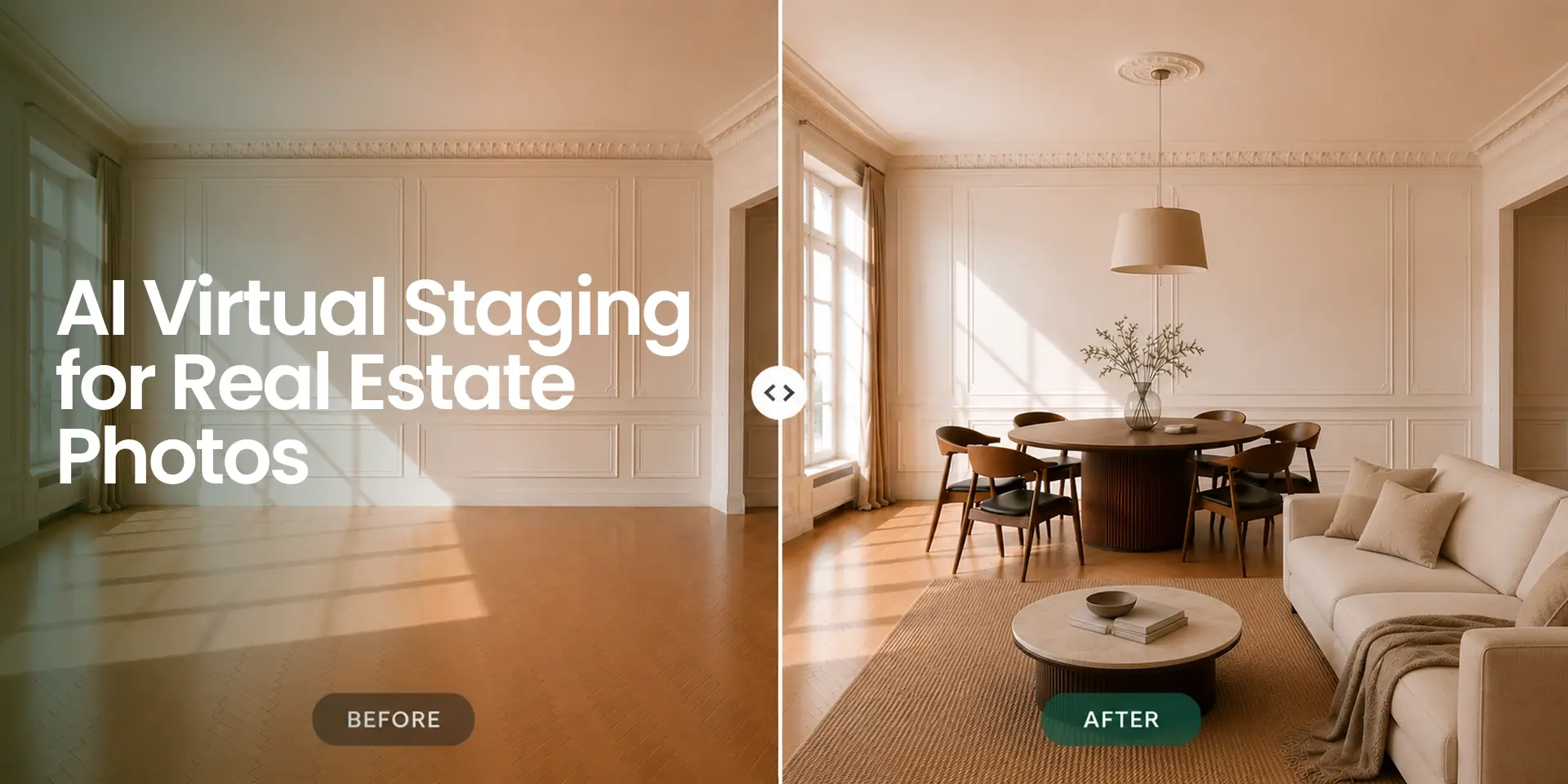
Product imagery is where this shows most clearly, and where companies differ the most. Some have built a proper pipeline for visual content. Others use off-the-shelf image generators and accept that the sofa in the picture sometimes differs from the one in the box. They know it hurts returns, but still prefer it to an empty product page.
We think that's a short-term trade. A generated lifestyle shot can look great and still give the sofa a different armrest. The shopper has no idea the image was made by AI. What she notices is that the sofa she received isn't the one she ordered, and next time she trusts your photos a little less.
The research points the same way. In a June 2026 Baymard survey of 2,273 US online shoppers, 60% said knowing a product image was AI-generated would make them less confident about buying, and 17% wouldn't feel confident enough to buy at all. Baymard's advice is to keep primary product images authentic and use AI for supporting visuals. Meanwhile, Salsify's 2026 Consumer Research found that 45% of shoppers returned an online purchase in the past year because the product content was wrong.

In practice, a working setup starts from the actual product photo and data rather than a text prompt describing something similar. Before an image goes live, someone compares it with the original: shape, proportions, fabric, configuration. And when you need the same sofa in twelve fabrics, from one angle and in one light, rendering from a 3D model with real materials is more reliable than generating twelve separate images, because the geometry can't drift.
Old Boot Sofas made the same call for their range:

Zolak Studio covers both sides: AI-generated lifestyle scenes built from your original product photo and 3D-rendered images for series where every variant has to match the product exactly. More on this in our guide on creating accurate AI product images.

2. Personalization: From "You Might Like" to "This Is How It Looks at Home"
The shopper likes the sofa, but not in that fabric.
Retailers want personalization that feels like magic: content made for each shopper and recommendations that land the first time. Shoppers expect it too. McKinsey research found that 71% of consumers expect companies to personalize their interactions, and 76% get frustrated when that doesn't happen. Most of that work happens in data and recommendation systems.
Once a recommendation does its job, the question gets narrower: will this sofa, in this fabric, work in her living room? Only seeing it there can answer that.
Product visualization covers this in two ways.
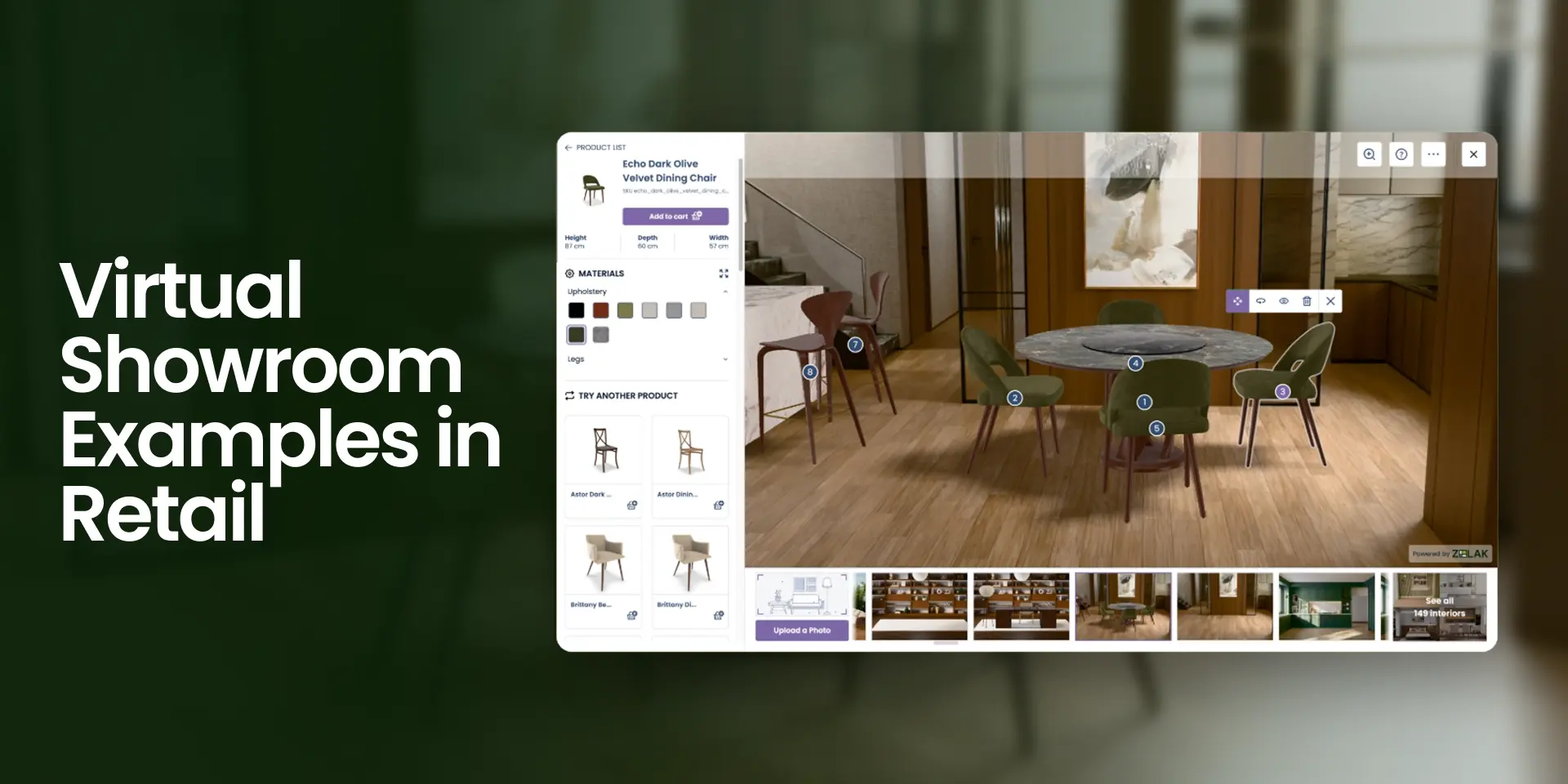
- In a 3D configurator, the shopper switches fabric, color or finish for each part of the sofa and sees the result right away instead of guessing from a swatch.
- With User Interior Visualization, she uploads a photo of her room, removes the furniture that's already there, places products from your catalog and compares options. The same sofa in two fabrics, in her own living room.
Koala Living, an Australian furniture retailer with 23 galleries, runs its Room Designer this way: customers pick a ready-made interior or upload a photo of their own room and furnish it with Koala pieces before they buy. Curtain brand Valolma uses the same add-on behind a "See it in your room" button in its site header, so shoppers can preview curtains on a photo of their own space.

Shoppers can also download a PDF of the room with every product in it, including SKU, price and a link to the product page, which helps when a partner or designer has a say in the purchase.
So visualization picks up where recommendations stop: the shopper has narrowed it down and wants to be sure before paying.
3. Payment Security: Trust at Checkout
She has picked the fabric. Now she opens the cart.
Payments are where security worries start. Every new provider, integration or checkout flow adds another place where something can go wrong, and when it does, customers are the ones who get hurt. It also costs sales before anything breaks: in Baymard's checkout research, 19% of US online shoppers say they have abandoned an order because they didn't trust the site with their card details.
Protecting payment data is the job of your store's infrastructure and your payment provider, following standards like PCI DSS. Shoppers, though, judge it by what happens on screen, and two moments in particular:
- When she's redirected to a payment provider's page, it should be clear who she's paying, what amount she's confirming and where she'll land afterwards.
- When she opens the cart, the fabric and price should be exactly what she chose. If the configuration disappears or the price changes, she hesitates right before paying, even if nothing is actually wrong.
The cart is where product visualization can help or add risk. A 3D tool on top of your store shouldn't introduce its own payment step. In Zolak, the shopper adds the configured sofa to the cart straight from the configurator or showroom. The selected variant goes to your store's cart through the product identifiers set up in Zolak, and payment happens in your existing checkout. Zolak never touches payment data.
With a pricing integration, the configurator also updates the price as she changes options, so the number she saw while choosing is the number she sees in the cart. Both the cart handoff and live pricing need a backend integration on the retailer's side.

4. Legacy Systems: Why the Same Sofa Has Three Prices
Step back from the shopper for a moment. Much of what can go wrong above comes down to product data that lives in too many places.
Old systems are hard enough to maintain on their own. The real problem starts when there are many of them and they barely talk to each other.
For shoppers, it shows up as inconsistency. The fabric is available on the product page, the delivery date changes in the cart, and the store quotes a different price. Behind that one sofa is data from an ERP, a PIM, an ecommerce platform and a store system that were never designed to agree. Shoppers notice: in Salsify's 2025 Consumer Research, 54% said they had abandoned a purchase because product information wasn't consistent from one channel to the next.
3D won't fix your ERP, but it also shouldn't add another system that disagrees with the rest. That depends on how visualization maps to the data you already have:
- In Zolak, every product and every variation has its own SKU, price and description.
- Through the Zolak Public API, your ecommerce system can update product names, prices, descriptions and availability in Zolak, so the configurator shows the same data as your store.
- Materials can carry their own SKU ID, so a fabric in the configurator corresponds to a real fabric in your catalog.
- When the shopper picks a fabric and adds the sofa to the cart, your store receives a SKU it already knows.
For retailers with complex setups, connecting 3D to existing product data is part of the integration project from the start. See Zolak integrations for how it works.

One Sofa, Four Challenges
Retailers usually handle these four challenges as separate projects, but a shopper meets all of them in a single purchase. A photo that doesn't match, a fabric she can't picture at home, a price that changes in the cart: each one is a small reason not to buy, or to send the sofa back.
You don't have to solve all four at once. Start with the one your customers feel most. Your own store usually shows which one that is, if you walk through a purchase the way a shopper would.
Take your best-selling sofa and try this:
- Put its product photos next to the real sofa. If any image changes the shape, fabric or configuration, start with your visual content.
- Look at your return reasons. If "looked different than expected" is near the top, the problem starts on the product page, not in logistics.
- Pick a non-default fabric and add it to the cart. If the fabric, price or delivery date changes along the way, start with your product data and cart integration.
- Ask your store team what customers ask before buying. If it's "will it fit" or "what does it look like in grey", shoppers can't see enough online to decide.
In furniture, the first problem is usually the gap between what shoppers see and what they get. It's also one of the most expensive: a sofa that comes back costs far more to return than a T-shirt.
If you'd like a second pair of eyes on that walkthrough for your catalog, talk to our team.